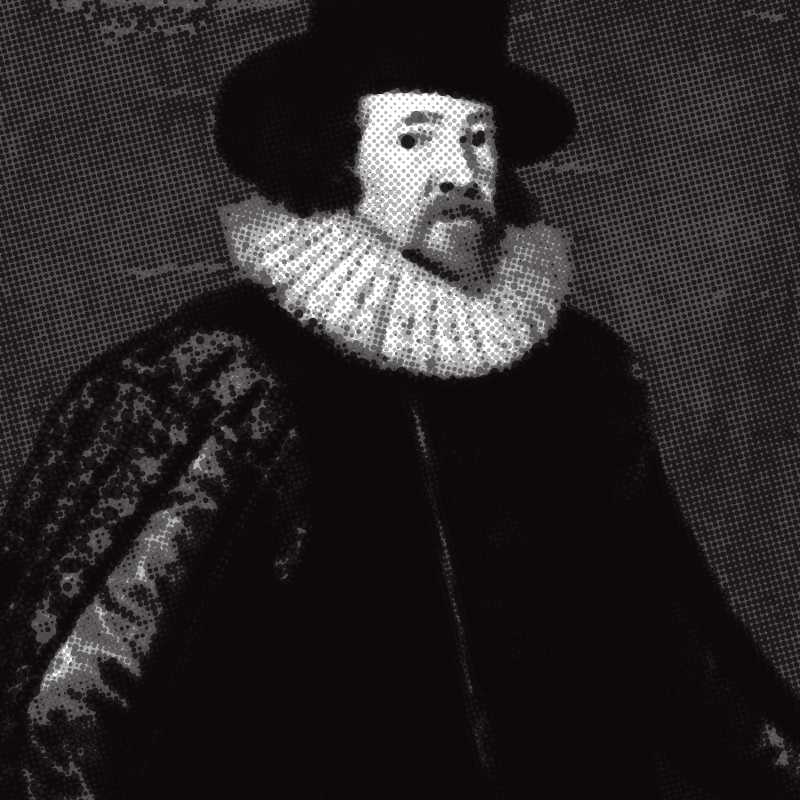
Sir Francis Bacon
-
Certainly virtue is like precious odours, most fragrant when they are incensed or crushed: for prosperity doth best discover vice; but adversity doth best discover virtue.
-
Certainly virtue is like precious odors, most fragrant when they are incensed, or crushed: for prosperity doth best discover vice, but adversity doth best discover virtue.
-
Read not to contradict and confute, nor to find talk and discourse, but to weigh and consider.
-
A little philosophy inclineth men's minds toward atheism; but depth of philosophy bringeth men's minds about to religion.
-
A little philosophy inclineth men's minds toward atheism, but depth of philosophy bringeth men's minds about again to religion.
-
Hope is a good breakfast, but it is a bad supper.
-
Men fear death as children fear to go in the dark; and as that natural fear in children is increased by tales, so is the other.
-
There be three things which make a nation great and prosperous: a fertile soil, busy workshops, easy conveyance for men and goods from place to place.
-
Ask counsel of both times-of the ancient time what is best, and of the latter time what is fittest.
-
In this theater of man's life, it is reserved only for God and for angels to be lookers-on.
-
Nature is a labyrinth in which the very haste you move with will make you lose your way.
-
They are ill discoverers that think there is no land, when they can see nothing but sea.
-
Houses are built to live in, not to look on; therefore, let use be preferred before uniformity, except where both may be had.
-
Man seeketh in society comfort, use and protection.
-
Knowledge is power.
-
Discretion in speech is more than eloquence.
-
Choose the life that is most useful, and habit will make it the most agreeable.
-
Seek ye first the good things of the mind, and the rest will either be supplied or its loss will not be felt.
-
Some books are to be tasted, others to be swallowed, and some few to be chewed and digested: that is, some books are to be read only in parts, others to be read, but not curiously, and some few to be read wholly, and with diligence and attention.
-
Reading maketh a full man, conference a ready man, and writing an exact man.
-
In taking revenge, a man is but even with his enemy; but in passing it over, he is superior.
-
Death is a friend of ours; and he that is not ready to entertain him is not at home.
-
Dolendi modus, timendi non item.
(To suffering there is a limit; to fearing, none.)
-
The subtlety of nature is greater many times over than the subtlety of the senses and understanding.
-
There is no excellent beauty that hath not some strangeness in the proportion.
-
He that will not apply new remedies must expect new evils; for time is the greatest innovator.
-
A prudent question is one half of wisdom.
-
Whoever is out of patience is out of possession of his soul. Men must not turn into bees, and kill themselves in stinging others.
-
God has placed no limits to the exercise of the intellect he has given us, on this side of the grave.
-
Praise from the common people is generally false, and rather follows the vain than the virtuous.
-
A sudden bold and unexpected question doth many times surprise a man and lay him open.
-
There is a difference between happiness and wisdom: he that thinks himself the happiest man is really so; but he that thinks himself the wisest is generally the greatest fool.
-
Money is like muck, not good except it be spread.
-
There is no great concurrence between learning and wisdom
-
Whosoever is delighted in solitude is either a wild beast or a god.
-
A little philosophy inclineth man's mind to atheism, But depth in philosophy bringeth men's minds about to religion.
-
Books must follow sciences, and not sciences books.
-
The job of the artist is to deepen the mystery.
-
Silence is the virtue of fools.
-
By far the best proof is experience.
-
He of whom many are afraid ought to fear many.
-
Knowledge is power.
(Ipsa Scientia Potestas Est)
-
I have taken all knowledge to be my province.
-
Revenge is a kind of wild justice, which the more man's nature runs to the more ought law to weed it out.
-
If a man will begin with certainties, he shall end in doubts; but if he will be content to begin with doubts he shall end in certainties.
-
The worst solitude is to be destitute of sincere friendship.
-
Read not to contradict and confute, not to believe and take for granted, not to find talk and discourse, but to weigh and consider.
-
Natural abilities are like natural plants; they need pruning by study.
-
In charity there is no excess.
-
For there is no question but a just fear of an imminent danger, though there be no blow given, is a lawful cause of war.
-
A wise man will make more opportunities than he finds.